- Home
- Sourcing guides
- Graduation Charms: A Sourcing Guide for Retail Buyers
Graduation Charms: A Sourcing Guide for Retail Buyers
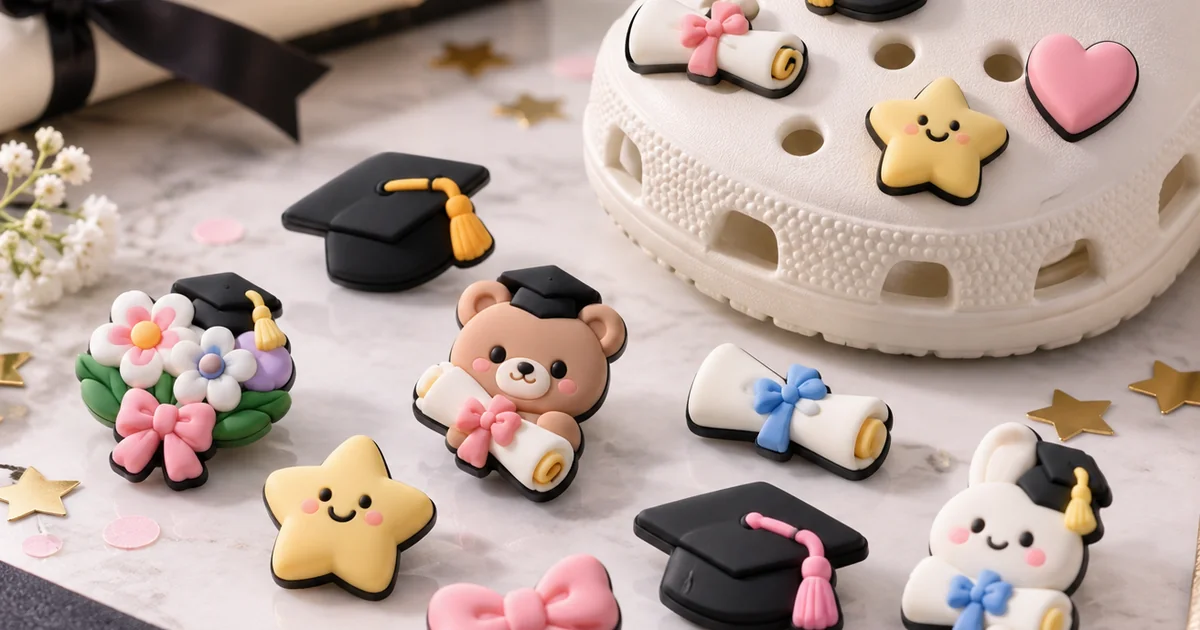
Graduation is the most orderly peak in the charm calendar — which is exactly why retail buyers lose money on it. The demand is certain, the date is known months out, the shopper is motivated and emotionally loaded, and the failures are almost never about demand. They are about structure: ordering too late for the class-of moment, or building the range on motifs that institutional purchasing will not clear. This guide walks the calendar, the motif rules and the programme shapes that make the May–June window pay.
1. The calendar is the strategy
Wholesale graduation rhythm starts far earlier than the ceremony: buyers begin watching in January and February, core orders land March through April, and retail runs the two months of May and June. The reason is the usual one — a class-of gift is anchored to a date and a person, not to a browsing mood. A shopper who misses the ceremony window does not buy a 2027 charm in July; the demand simply evaporates.
Two consequences follow. First, the ordering conversation is a first-quarter conversation: by the time spring stock arrives on shelves, the wholesale decisions are already three months old. Second, the year itself is inventory risk. Class-of lettering belongs on the backing card and nowhere else — the charm itself stays generic, so unsold pieces survive into the next season instead of dying on the clearance rack. The seasonal sourcing calendar maps how this window sits against the rest of the year.
2. Who is actually buying
Three distinct shoppers fund the peak, and each wants a different shape of product.
- Family and friends gifting the graduate. The wearable-expression crowd: initials, name pieces, keepsake formats on a printed card. This is the emotional centre of the season — NRF's Valentine research shows jewelry leading gift spending because "wearable and expressive" is how Americans mark occasions, and graduation inherits the same logic in miniature.
- The graduate's own celebration. Year pieces, major-of-study symbols, school-colour ways — the identity end, where the charm says something about the wearer rather than the giver.
- Institutions: schools, departments, cohort programmes. The volume end, and the most under-built. A nursing school marking its graduating class, a department honouring its teaching assistants, a hospital auxiliary thanking its residents — these are cohort editions, and they are best understood as private label at its lightest: original occupation artwork re-coloured to the institution's palette, the year kept to the card, the charm strictly generic. The private label build guide covers the decision logic.
What none of these shoppers can be served with is licensed campus marks. School crests and university logos are exactly the territory the motif rules below exist to avoid.
3. Motif rules: what clears, what stalls
The graduation motif library that survives institutional review is short and proven:
- Year and milestone plaques. Word-plaque formats carrying the class year — with the lettering-on-card rule applied, so the year ages out gracefully. Moulded lettering keeps depth and legibility, approved on cured curved pieces.
- Major-of-study symbols. The discipline, not the institution: a stethoscope rather than a teaching hospital's crest, a palette rather than a law school's shield. Symbols of the field clear purchasing; symbols of the school do not.
- Occupation icons. The nurse, the coach, the teacher — identity categories where the giver is saying "this is what you became". Original artwork only, no red-cross or red-crescent emblems anywhere in the range.
- School colours, not school marks. Colour ways carrying the affiliation without touching protected identity — the same trick that keeps sports programmes clean: team colours without the crests.
- Keepsake backing cards. The commemorative surface where the year, the name and the message live. A moulded charm on a printed card is the standard graduation format precisely because the card carries the specifics and the charm carries the permanence.
Every one of these rules is a rights discipline before it is a design preference. The sourcing guide covers the craft base — moulded soft PVC, a 30 mm wearable size, colour cards for every approval — and the graduation layer simply adds the year rule on top.
4. Programme shapes that work
Three formats cover the season, and they map onto the structure above:
- The class-of card. Five-piece sets on a printed backing card for the gifting position: one hero plaque, the core motifs, a keepsake message. The card does the dating, the charms do the remembering.
- The cohort edition. For institutional buyers — occupation artwork in the house palette, year on card, generic charm, order sized to the cohort. Nursing and medical programmes are the anchor case, re-ordered every year with only the card changing.
- The teacher-appreciation rail. Occupation icons and thank-you plaques for the second gifting wave that follows graduation season into June — the same moulds serving a different occasion, which is how a two-month peak stretches into a three-month season.
The structure discipline is the usual one: one hero, three to five core, one or two tests — the tests being where next year's winners surface. A graduation programme planned that way is not a seasonal gamble; it is an annuity with a June maturity.
5. Red flags, briefly
- Class-of lettering moulded into the charm itself — stranded inventory, guaranteed.
- A range built on campus landmarks, crests or mascots — unlicensable, unpurchasable by institutions.
- Graduation stock ordered in April — the wholesale window closed two months prior.
- "Teacher gifts" that are literally re-ticketed graduation leftovers, card and all.
6. What we build
Our series are drawn for the drop-moulding process at a 30 mm wearable size — word and milestone plaques, occupation icons, colour-led series and real-breed animals, all original artwork from our in-house studio, with moulding, colour matching, baking and UV printing done in-house and inspection before packing. Graduation programmes — class-of cards, cohort editions, teacher rails — run on that library every year. If you are planning for the season, tell us the class you want to mark — sales@mochicharms.com.